



You’ve probably had that moment. You see a successful app and think, “Why did this one work?”
It’s a reasonable question. And personally, even after years of building software, it still comes up. Not because there’s a single answer, but because the same early decisions tend to shape how things turn out.

Apps get grouped together too easily.
Some are built for public use, like the App Store or Google Play. Success there is fairly visible:
If usage drops, it becomes obvious pretty quickly. But a lot of apps don’t work like that.
Internal tools are built for a specific team or organisation. They are not chasing growth. They are solving something practical:
We have seen both sides at Fluff Software.
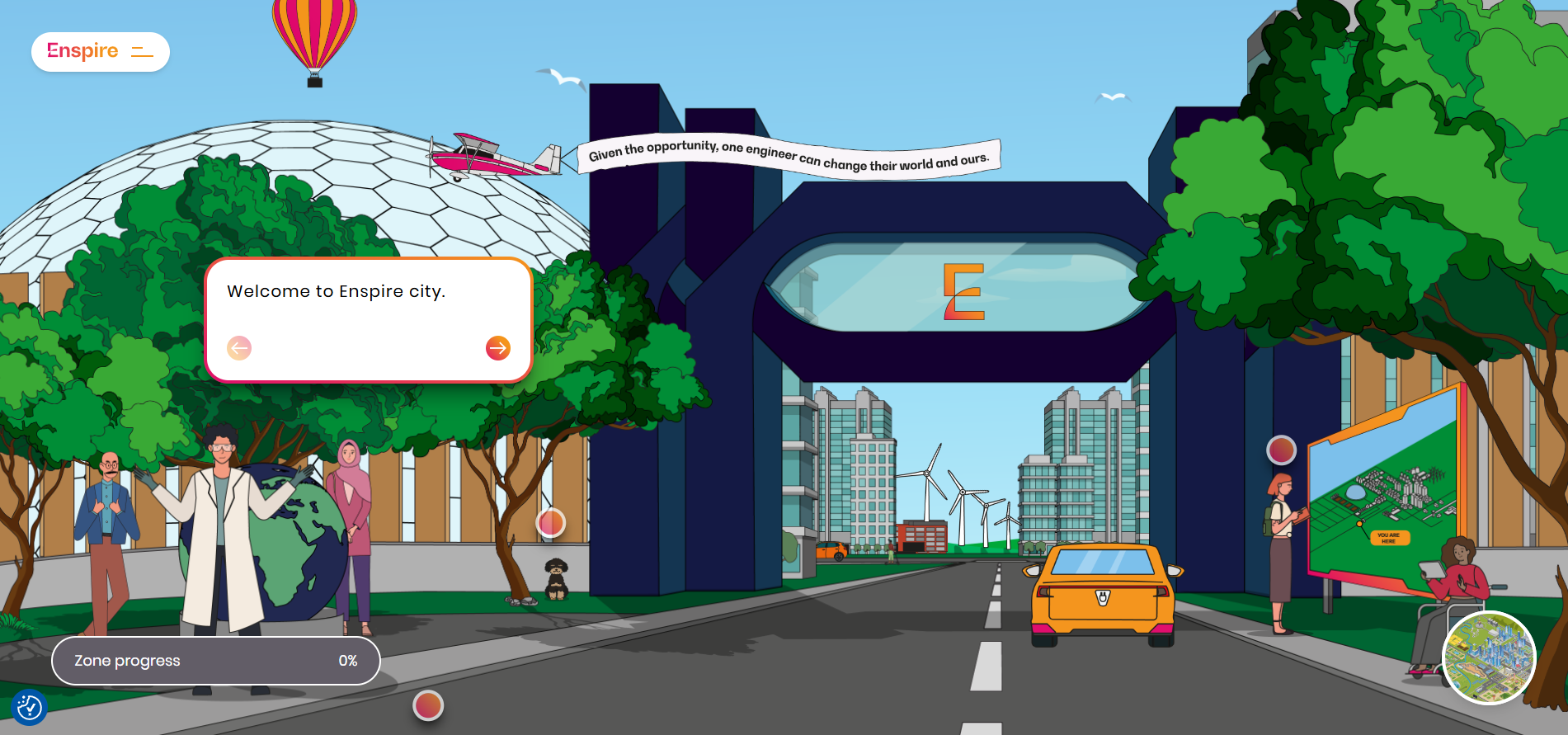
An educational platform like Enspire City was designed to engage students and spark interest in STEM. Success meant people actually exploring and learning.
On the other hand, a tool for SGMF replaced a manual safety calculation process. No public users, but a clear outcome. A simple tool for busy ship captains and staff to access - and a more efficient back-end process behind it all reducing manual work and reducing errors. Faster work and fewer errors.
Most issues do not start in development. They start earlier, when the idea is still forming.
The mistake is simple: building something without properly checking if it is needed.
It usually does not feel like a mistake at the time.
The idea makes sense, there is momentum, and it is tempting to just start building and figure it out later. But that is where things drift.
Without validation, decisions are based on assumptions. And those assumptions tend to go unchallenged until it is expensive to change them.
This part gets overcomplicated, although it does not always need to be.
You are just trying to answer a few basic questions before committing time and budget.
If you are building a product:
If it is for internal use:
You can also test ideas earlier than most teams think.
A rough prototype, even something basic, is often enough to get useful feedback. It does not need to be polished. Just clear enough to react to.
If you prefer structure, frameworks like the Business Model Canvas can help organise your thinking. But the goal is still the same. Understand the problem properly before trying to solve it.
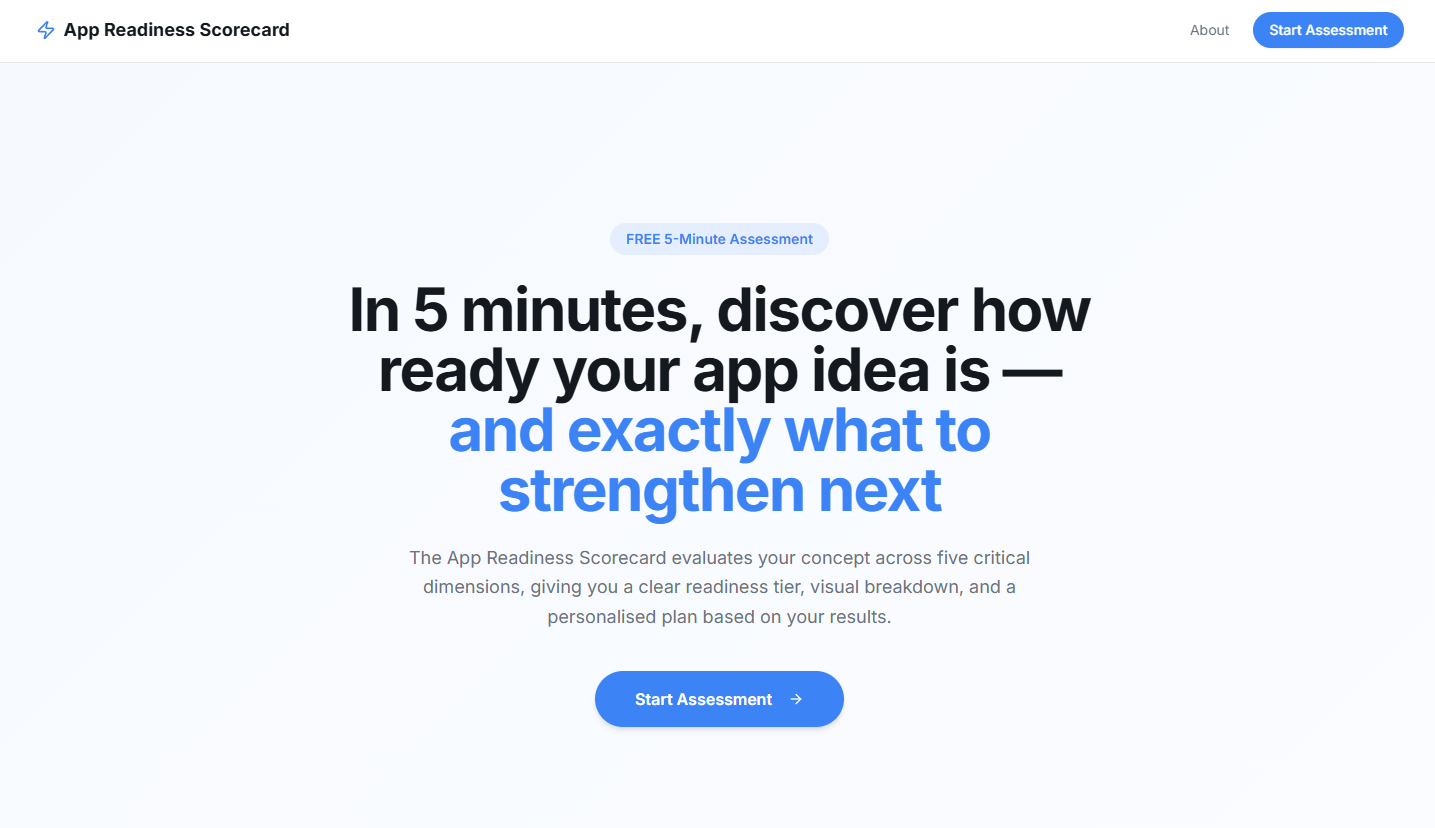
One thing we have noticed is that early validation is where a lot of founders hesitate. Not because it is unimportant, but because it is unclear where to start.
So we built something simple to help with that: the App Readiness Scorecard.
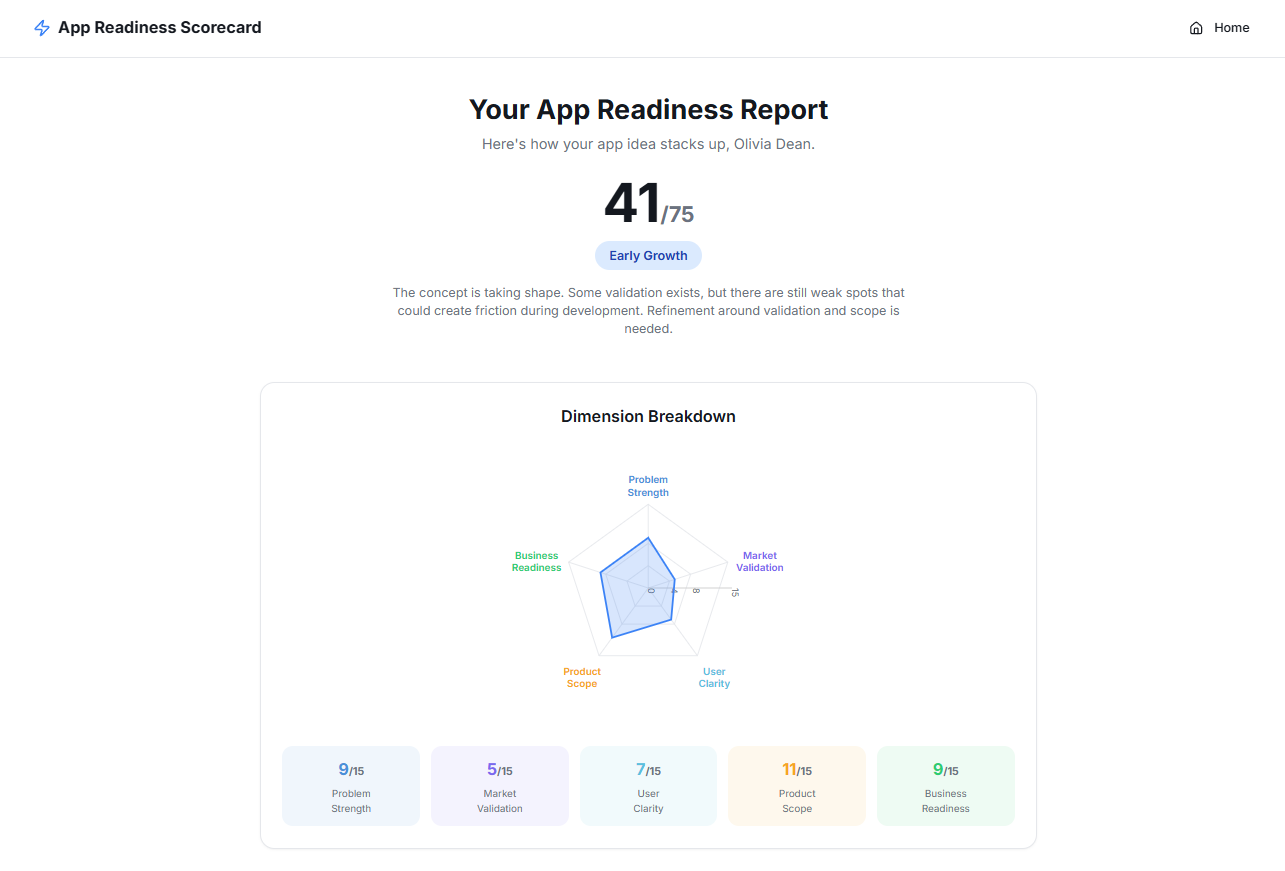
It is a short assessment that looks at your idea across five areas:
This consists of fifteen questions that give you a quick snapshot of where things are solid, and where they are still a bit uncertain.
It is not meant to be definitive, but rather just a useful check before you go further.
Building an app takes time. And most of the risk sits in the early assumptions. So it is worth slowing down just enough to answer one question clearly:
Is this actually solving a real problem?
At Fluff, we mostly build apps and tools for the education and engineering sectors. A lot of what is here comes from working closely with teams in those spaces, seeing what works and where things tend to go off track.
If you are building something software related, hopefully this gives you a clearer place to start.
Learn more about how we can help you build your next app by sending us an email at contact@fluff.software or a direct message to Scott Gulliver.
